

2025 Pearson Edexcel GCSE French Paper 3 and Mark Scheme Combined (1FR0/3H: Reading and understanding in French Higher Tier)
4.7
2025 Pearson Edexcel GCSE French Paper 3 and Mark Scheme Combined (1FR0/3H: Reading and understanding in French Higher Tier)
View example
Details
Comments
Reviews

2025 Pearson Edexcel GCSE French Paper 3 and Mark Scheme Combined (1FR0/3H: Reading and understanding in French Higher Tier)


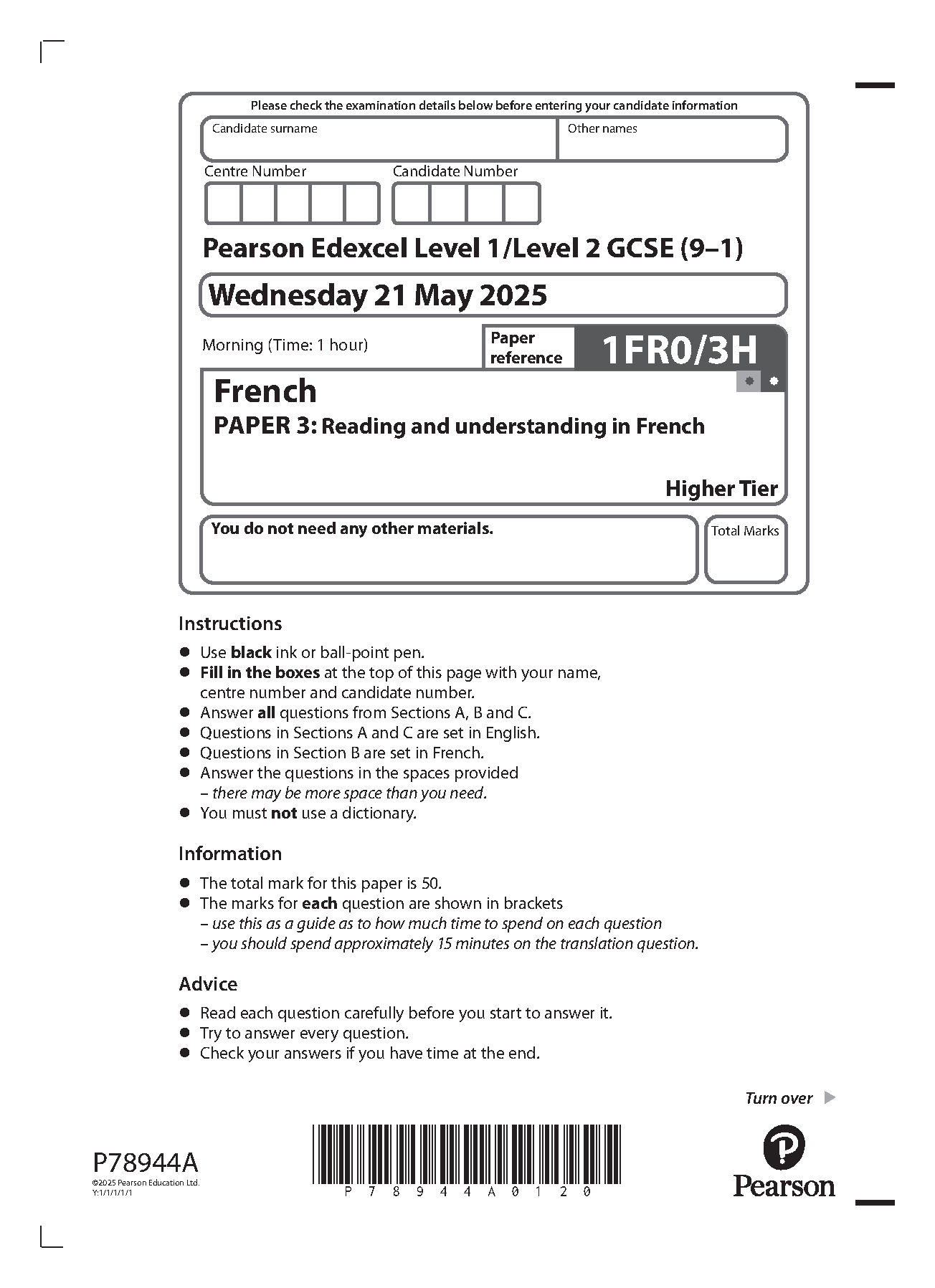
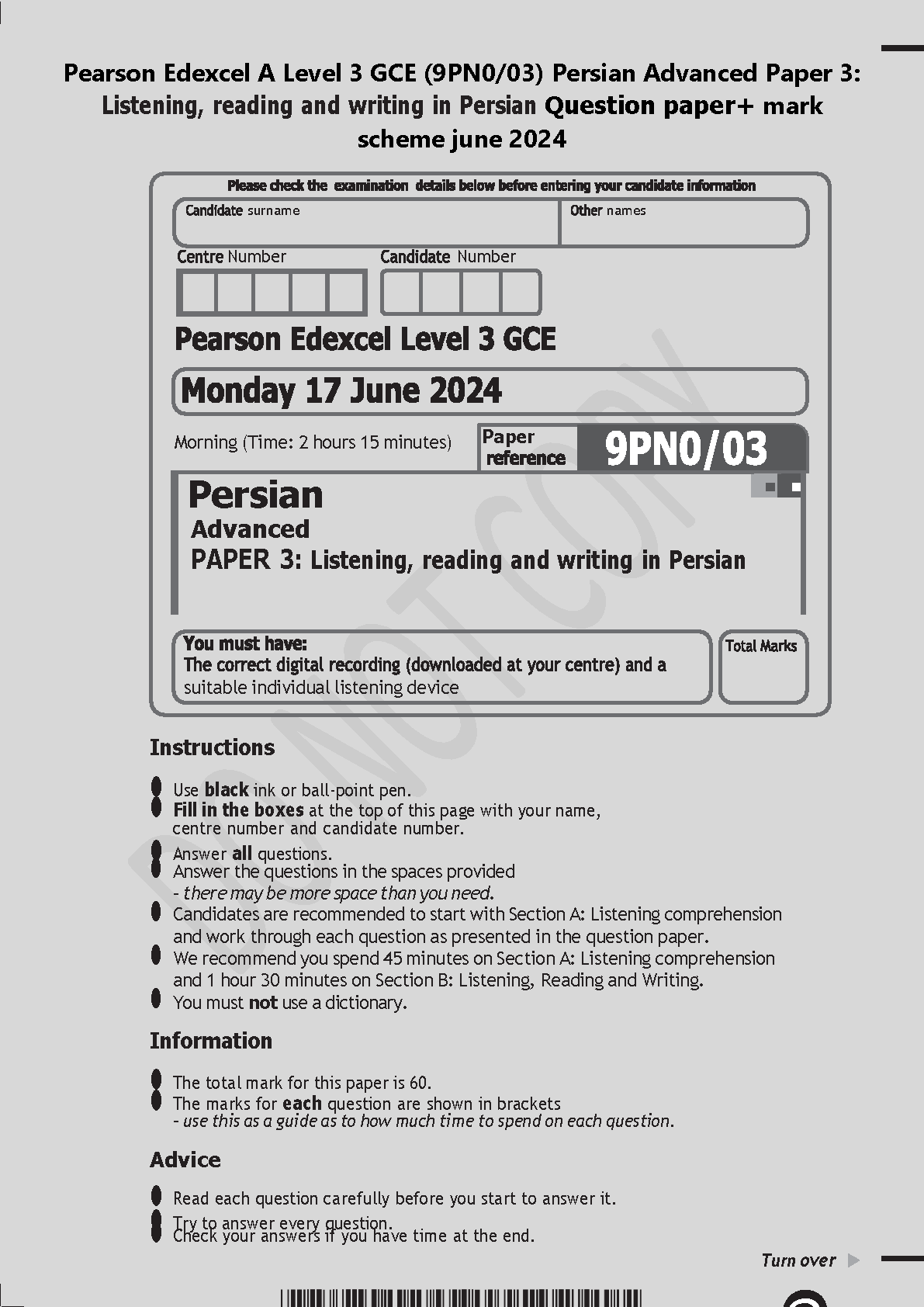
📖 Paper 3H: Reading and Understanding in French — Overview & What It Tests


  • Paper code: 1FR0/3H


  • Paper title: Reading and understanding in French (Higher Tier)


  • Duration: 60 minutes


  • Marks: 50 marks total; this paper contributes 25% of the total GCSE French qualification. 


  • Purpose: To assess a student’s comprehension of written French — both in familiar and unfamiliar contexts, formal and informal, across a variety of text types (e.g. adverts, articles, emails, dialogues, notices, longer texts). 


Structure & Sections


Paper 3H consists of three sections: 


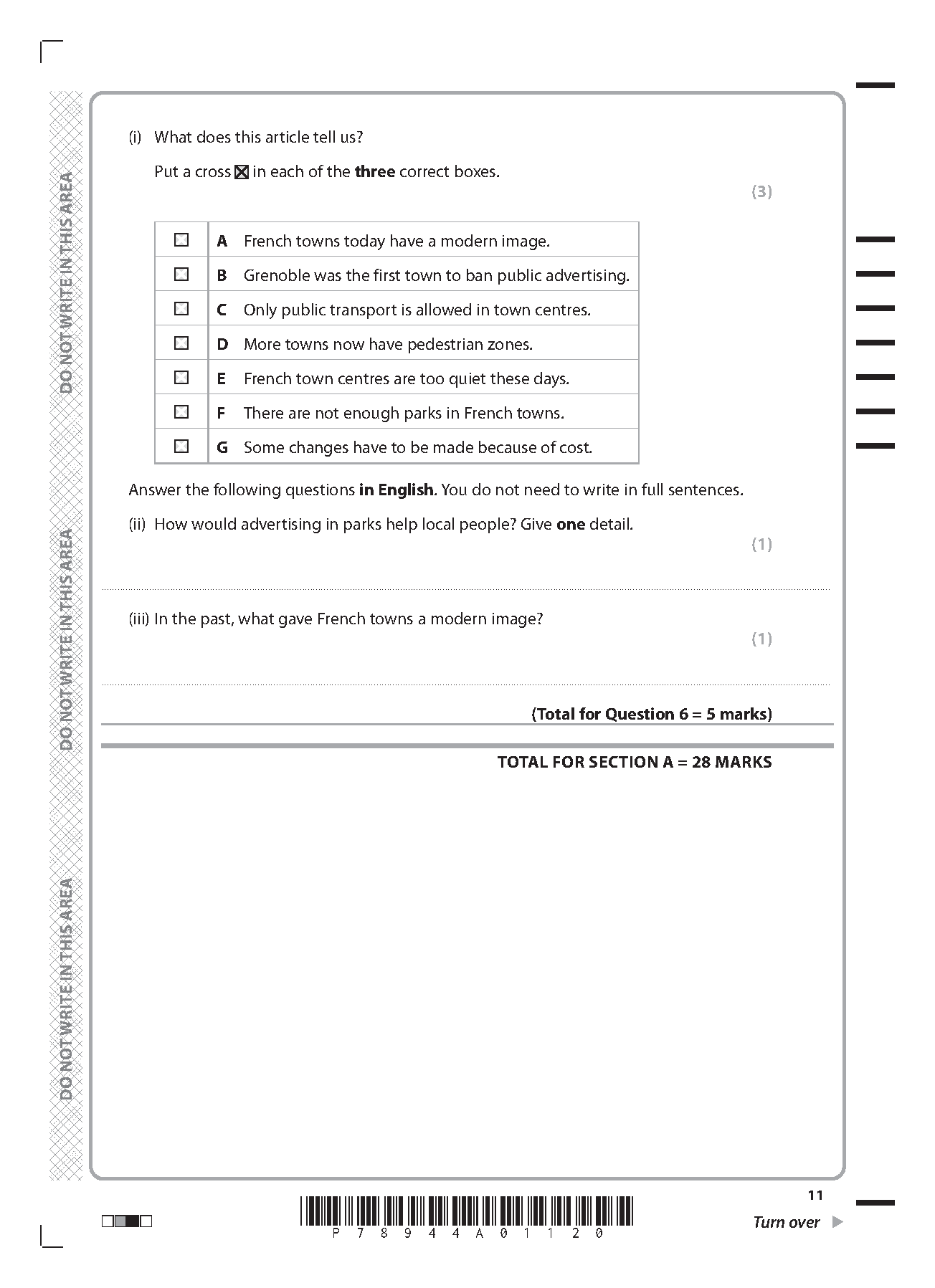
  • Section A — Reading and Understanding: 40 marks. Students read one or more French texts and answer a variety of question types (e.g. multiple‑choice, multiple-response, short-answer open responses) testing comprehension, gist, detail, inference. Questions in this section are set in English, and answers are to be given in English. 


  • Section B — (sometimes labelled Reading/Language tasks in French): The specification refers to some questions set in French. In Paper 3H, certain reading‑comprehension questions may use French prompts, requiring understanding in context. Section C — Translation into English: 10 marks. Students are required to translate a short passage from French into English. Instructions are given in English. 


Students must answer all questions from Sections A, B and C. 
Dictionaries are not permitted, and answers should be written in English (for comprehension/translation) as specified. 


What It Means for Students / What to Prepare


  • Be able to read and understand a variety of text types: short announcements, adverts, dialogues, longer prose passages — both formal and informal.


  • Practice different comprehension tasks: picking out details, summarising information, making inferences, understanding opinions or implied meaning.


  • Build strong translation skills: the translation passage may test your vocabulary range and grammar understanding, so practice translating from French to English under exam conditions.


  • Time‑management: allocate enough time to read carefully, respond to comprehension questions, and complete the translation (specimen advice suggests around ~15 minutes for translation) 


  • Work on general reading stamina: some texts may be long or dense, so practise reading extended passages under time pressure.